

The philosophy
Anaqmiski means honey from the sky in Quechua, a name born in the Andes and that has become a bridge between two lands, Peru and Brittany. It carries something larger than I would have ever imagined.
Anaqmiski has become a philosophy of becoming, of bee-ing. It’s the practice of noticing the threads that connect everything: the bees and the birth, the body and the soil, the sacred and the everyday. Nothing here stands alone. A hive is a community. A postpartum is a season. A body remembers. Anaqmiski is the space where all of that is held together, fully and all under one sky.
This didn’t arrive as an idea first. It came from a life that kept circling back to the same questions, until the pattern became impossible to ignore.
Where it began
I’ve never experienced my life as a series of separate chapters. Looking back, it reads more like one long apprenticeship around the same handful of questions that have crystallized and refined with time: how do I stay useful? How do I stay real to my ever-growing self? How may I be in service to others and to this beautiful planet ?
How do I keep listening, when the world keeps asking me to hurry?
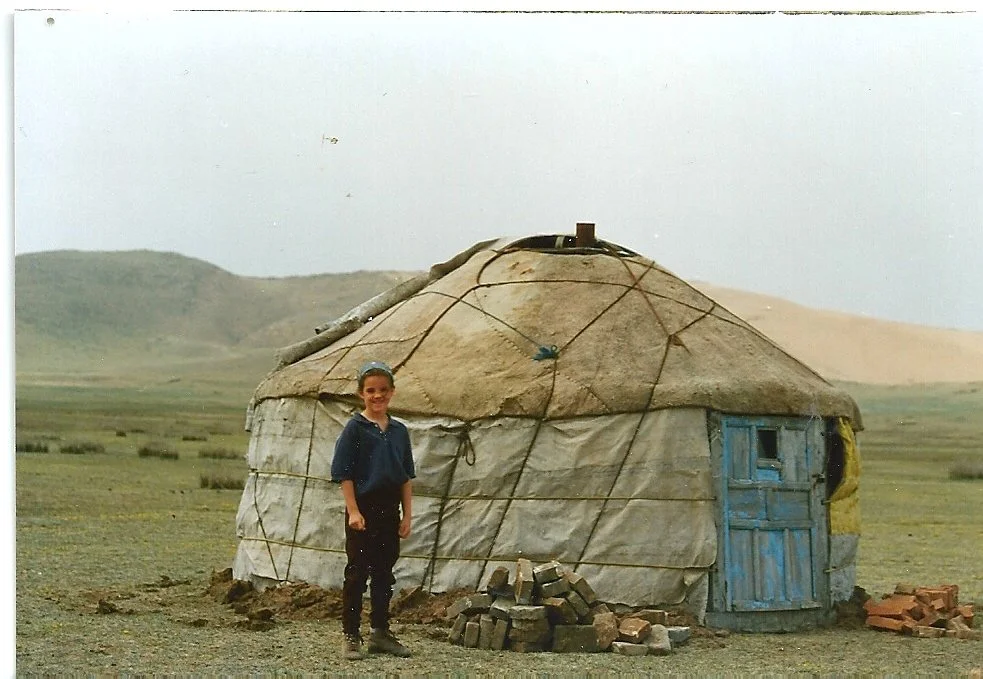
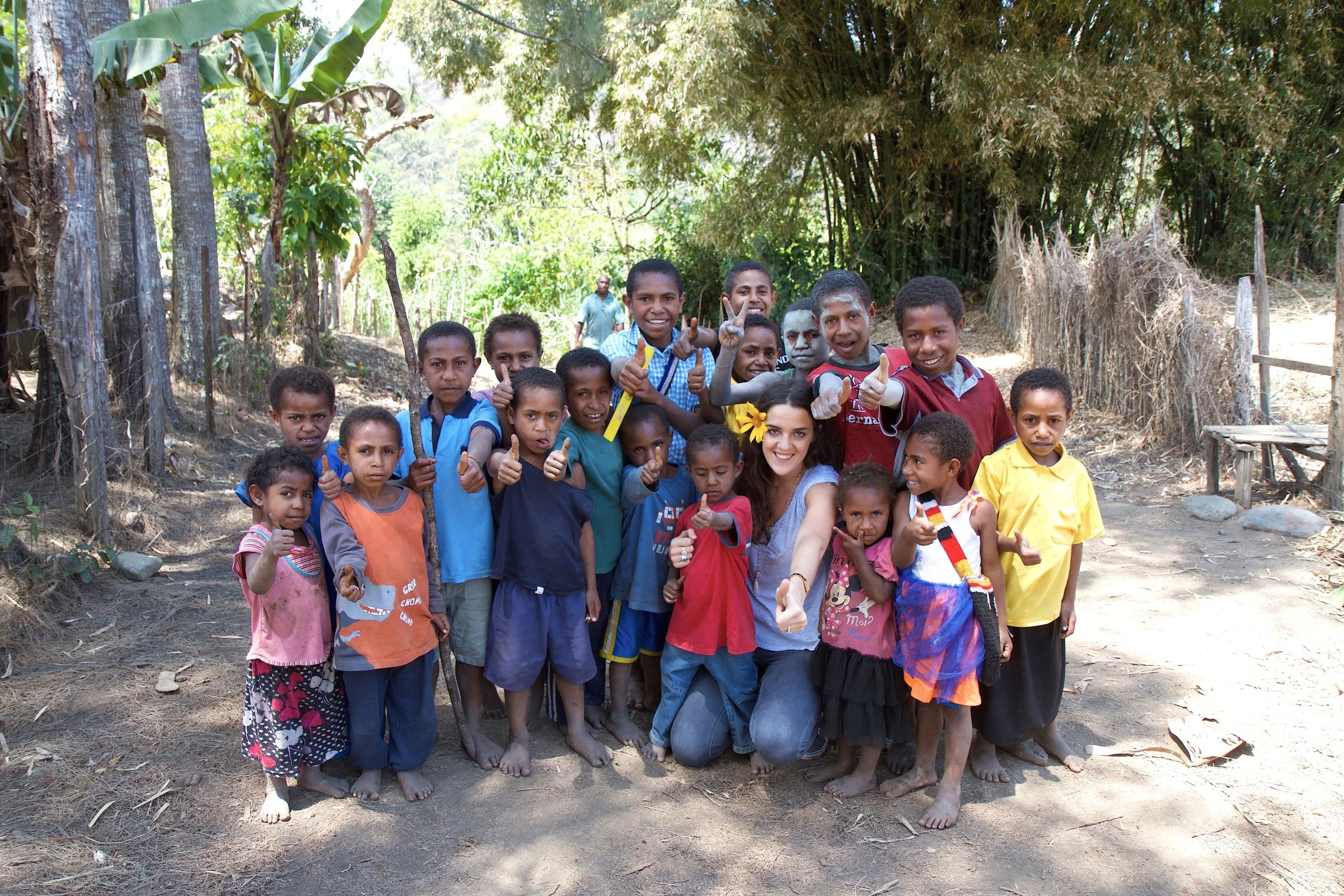
I grew up moving between cultures, in a family that saw the whole world as one big neighbourhood, culturally rich and textured. My childhood unfolded in Japan, China and Romania, my teenage years in Paris, and I went on to study in Brussels, Beijing and Australia.
That early exposure gave me something I still lean on today: an instinctive ease with difference, and a deep curiosity for the stories other people carry, their uniqueness, their pearls of wisdom.
I split my time between big cities and wild nature, and I quickly noticed how differently I felt in each. The cities offered plenty of distraction, but it was the quiet, wild moments that stayed with me. As a child, a long journey across Mongolia left a lasting mark on me: in those vast, arid plains I felt an immensity that still lives in me, and a sense that there were no borders between people, that we were all part of one whole. I still remember an old owl perched on the only tree for miles around! I was drawn back to nature again and again, to what has shaped us, nourished us and kept us alive, even though, paradoxically, I felt rather far from it.
In my twenties, the call took me to Papua New Guinea, where I founded a coffee and roasting business and ran three cafés. I employed women from the most vulnerable neighbourhoods and spent time sharing with them everything I had learned from the places I had been and the things I had seen. Over seven years, I watched them grow and fly with their own wings, and I had the privilege of knowing their children too, whom I grew very fond of.
Looking back on my years in this beautiful country, my greatest pride is having played a small positive impact in their journey, and the genuine sisterhood and mutual respect we shared.
It taught me to build something from nothing, to lead through presence rather than title, and to keep going in conditions that were often complicated and unstable. These are skills I still use today, simply in the service of very different work.
At 27, it was time for me, too, to spread my wings and leave the golden cage of expat life. I flew to Peru, and something in me recognised Cusco the moment I arrived: the mountains, the history, the way community was woven into everyday life. It touched a very deep place in my heart: a remembering, the echo of a distant call from within.
To seek, and to know thyself.
I left everything behind and stayed. What followed was a whole year of "silence": walking the high Andes and the Sacred Valley, sitting with myself, letting old layers fall away. It is the closest thing I have had to a fresh start, and it was there that the bees first found me.
I still can't fully explain what happens when I'm with them. Time changes shape. My senses sharpen while my mind goes quiet. There is a kind of mutual attention: I watch them, and in some way I am watched too, read, included. They became my teacher long before I ever called myself a beekeeper.
I opened a lovely honey shop in Ollantaytambo, gave it everything I had, and then watched it dissolve almost at once during the pandemic. I won't pretend it didn't hurt. But grief, I have learned, doesn't have to be the last word. Back in Brittany, in a world in turmoil, I chose to make that loss a door rather than a wall. I turned to the wild Breton coast I grew up near, and back to the bees, this time in a new landscape, learning an entirely different relationship with the land. I am still training in bee venom apitherapy today, guided by mentors in both Peru and Romania: one more thread in the same ongoing education.
Somewhere in that same period, motherhood entered the story too, and with it a whole new teacher. Going through my own postpartum, then training to support other women through theirs, showed me what the bees had already been telling me in their own way: that healing is not linear, that rest is not a luxury but a biological need, and that a body left in peace usually finds its own way back to balance, as long as it is given the right conditions.
This is the thread running through everything gathered here. Beekeeping, postpartum doula work, and the somatic therapy training I am currently pursuing are not three separate careers stitched together. They are one path, still unfolding: a convergence, not a reinvention. Each has taught me to slow down, to pay finer attention, to follow the breath of Nature through the seasons, and to trust what the body, whether a hive's, a mother's or my own, is already trying to say.
Kermenguy & the Sacred Valley
Anaqmiski has two homes. Kermenguy, a family manor on Brittany’s wild northern coast, is where the bees live, where the doula and somatic work happens, and where the land itself, buckwheat fields, sea-facing hedgerows, sets the pace of the seasons. The Sacred Valley of Cusco is where this all began, and where a long-term vision is still quietly taking root.
Both places show up throughout this site, not as separate destinations, but as the two poles this whole practice moves between.
Roots in Brittany, passing it on
The last couple of years have kept me mostly rooted in France, training and studying, and it’s here in Brittany, at Kermenguy, that this next chapter is really taking shape.
Kermenguy has become more than a home base, it’s where I’ve started thinking seriously about what it means to hand all of this down. The Breton black bee, Apis mellifera mellifera, is endangered, fewer than 5% of hives in France still hold this pure, native strain, and every season I spend tending them here feels like a small act of protecting something that could otherwise slowly disappear.
That instinct to pass things on extends to the next generation, quite literally. I love bringing children into contact with the hives, not to make beekeepers of them necessarily, but to give them one real, embodied encounter with how a living system works: patience, attention, reciprocity. There is something quite wonderful to watch the children’s first encounter with the bees; it is a remembering of our own Nature, that capacity to marvel at the Creation.. I already offer a beekeeping introduction program for local schools here in the area, you can see photos and read more about it on the Honey page.
None of this feels separate from the doula work, or the somatic training, or the honey. It’s the same practice, really, showing up, paying attention, and trusting that something wants to keep living, if we let it.
Where I am now
I still move between Kermenguy and the Sacred Valley of Cusco, and expect to for as long as I’m doing this work. Peru holds its own plans and projects, quietly taking shape alongside everything happening here in Brittany. More on that, in time. I work in French, English, and Spanish.
I also still teach a small online course, Sacred Bee Wisdom, [you can find it here].
Thank you for reading this far. This philosophy, and this story, are both still being written, as it always is.
Hasta siempre,
Olga